
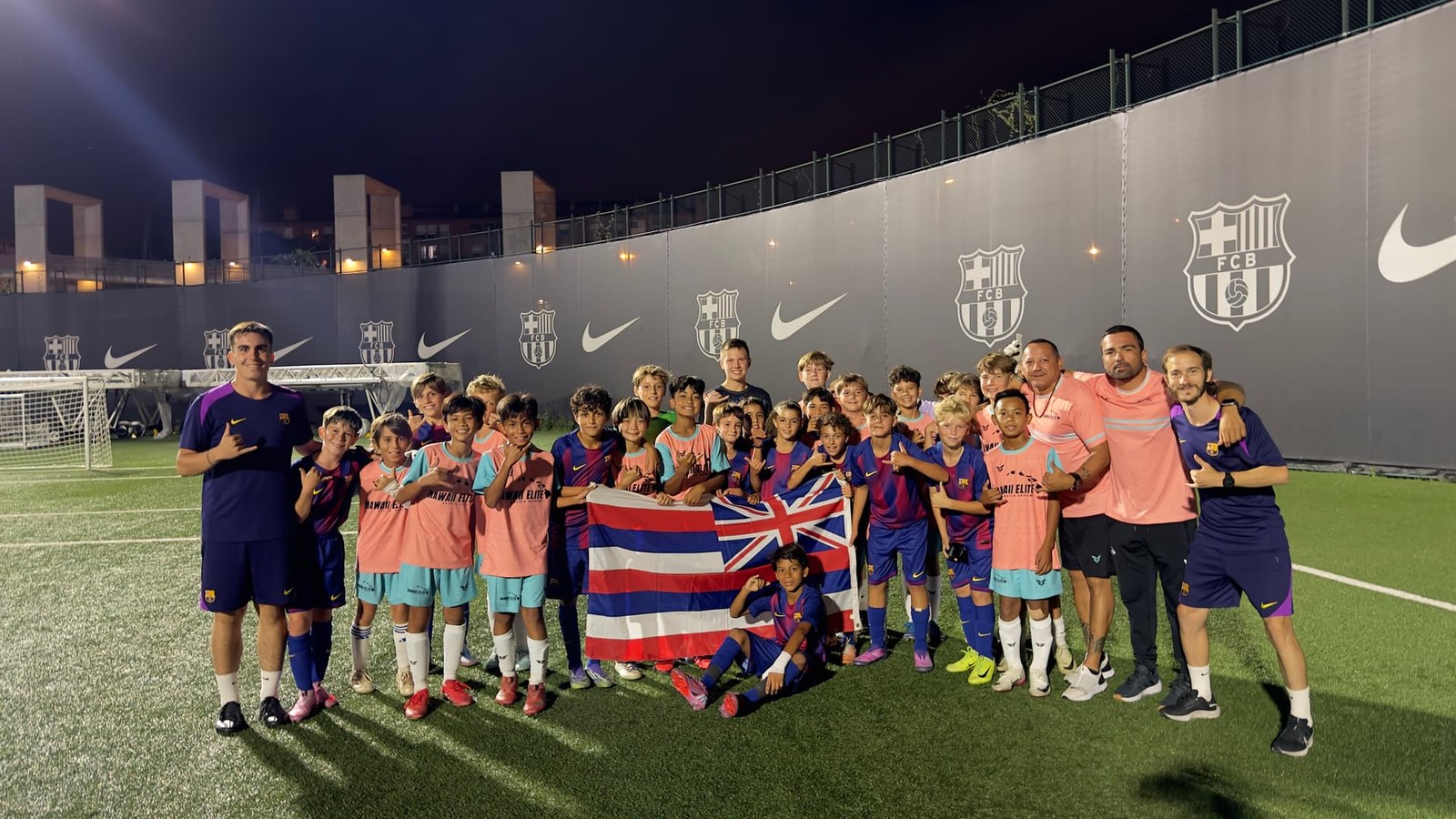
How to Plan a Youth Sports Team Trip Abroad: The Elite Strategy for 2027
Key Takeaways
- •A great overseas sports tour is not booked — it is planned. The best trips start with a clear mission, not a destination.
- •Give yourself time. The elite approach works to an 18-month timeline, which turns a stressful scramble into a calm, staged process.
- •Decide early whether your tour is high-performance, cultural immersion, or a blend of both — it shapes every other decision.
- •Risk management and safeguarding are non-negotiable for youth travel: consent, insurance, supervision ratios and duty of care come first.
- •The single biggest lever is who delivers it. Working with an experienced tour specialist removes the risk and the workload from your staff and parents.
Start With the Mission, Not the Map
The most common mistake in youth sports travel is picking a destination first. Elite programs do the opposite: they define what the tour is for before they decide where it goes.
Ask the honest question — what does success look like? Is it competitive development against tougher opposition? Is it cultural immersion and team bonding? Is it exposure for players who want to be seen? Is it simply a reward and a life experience? There is no wrong answer, but the answer changes everything that follows.
Set a few simple, measurable goals up front. They might be as concrete as "play four competitive fixtures against academy-level sides" or as human as "every player finishes the tour more confident and more connected to the group." When you can describe what a successful tour looks like, every later decision — destination, fixtures, length, budget — becomes far easier to make.
High-Performance, Cultural Immersion, or Both?
Broadly, youth tours fall into two camps, and understanding the difference helps you build the right trip.
High-performance tours are built around the football (or cricket, or rugby, or netball). The priority is quality training, strong fixtures, professional environments and player development. These trips suit competitive squads and academies who want to be pushed.
Cultural immersion tours put the experience first — the country, the people, the history and the growth that comes from travelling as a group. The sport is still central, but it shares the stage with everything else the destination offers.
In reality, the best youth tours blend both. A well-designed trip can deliver serious competitive football in the morning and unforgettable cultural experiences in the afternoon. Deciding your balance early is what keeps the itinerary focused rather than trying to do everything and mastering nothing.
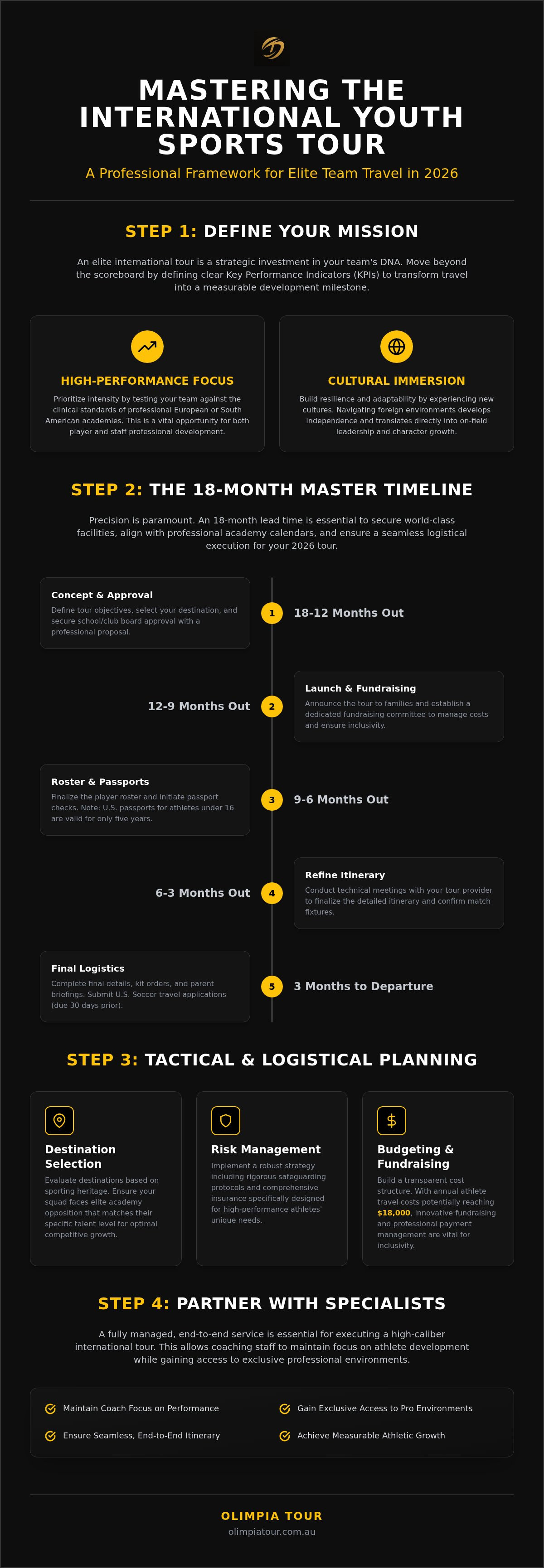
The 18-Month Master Timeline
The difference between a stressful tour and a seamless one is almost always time. Elite programs work backwards from departure on roughly an 18-month runway. Here is how that looks in practice.
18-12 months out — foundation. Confirm your mission and goals. Get buy-in from your club or school leadership. Set the broad budget and the core group of families who are committed. Choose your destination window and your tour specialist.
12-9 months out — design. Lock in the destination and the shape of the itinerary: the balance of training, fixtures and culture. Confirm age groups and squad numbers. Begin the paperwork trail — passports, and consent documentation for every travelling minor.
9-6 months out — commit. Secure flights and accommodation while availability and pricing are best. Confirm fixtures and training venues. Finalise insurance and safeguarding plans. Hold a parents' information evening so every family knows the plan.
6-3 months out — prepare. Confirm rooming lists, dietary and medical needs, and supervision ratios. Brief staff on their roles and responsibilities. Build the day-by-day itinerary and share it with families. Collect final payments to your schedule.
3 months to departure — execute. Final documentation checks, team meetings, kit, and a clear communication plan for parents back home. By now the hard work is done and the trip should feel calm.
Choosing the Right Destination
Once your mission is clear, the destination almost chooses itself. Different countries offer different things:
- •Spain and Germany are outstanding for high-performance football, with world-class academies and a deep football culture.
- •Argentina and Brazil offer passion, iconic stadiums and a football education you cannot get anywhere else — with 2027 making Brazil especially compelling.
- •Dubai is superb for tournament football and a safe, modern, family-friendly introduction to international travel.
- •Sri Lanka is a wonderful cricket destination, combining iconic grounds with rich culture.
- •Japan delivers a unique cultural immersion alongside a fast-growing football and sporting scene.
Match the destination to the mission, the age group and the experience level of your travellers. A first overseas tour has different needs to a seasoned academy's fifth trip.
Risk Management and Safeguarding Come First
When you travel with other people's children, duty of care is everything. This is where elite planning is most visible — and where cutting corners is most dangerous.
Build your plan around a few essentials: valid travel documentation for every traveller (check passport validity well ahead of time, as many countries require several months beyond your return date); written, signed consent from a parent or guardian for every travelling minor; comprehensive travel and medical insurance appropriate to the sport and the destination; clear supervision ratios and a named staff member responsible for welfare; and a documented plan for medical, dietary and emergency situations.
None of this needs to be overwhelming — but all of it needs to be deliberate. A good tour specialist will have templates, checklists and processes for every item above, which is exactly why most schools and clubs choose not to do it alone.
Coach and Staff Development
A tour is not just a player development opportunity — it is a professional development opportunity for your coaches and staff. Exposure to different coaching cultures, training methods and match environments makes your entire program better long after the trip ends. Build in time for your staff to observe, learn and connect with local coaches wherever the itinerary allows.
Measuring the Impact
Because you set goals at the start, you can measure the tour at the end. Did players get the competitive minutes you planned? Did the squad grow closer? Did individuals develop the way you hoped? Gather feedback from players, parents and staff while it is fresh. This is what turns a one-off trip into the first tour of an ongoing program — each one better than the last.
Why Work With a Specialist
You can plan an overseas tour yourself. But the reality is that flights, accommodation, fixtures, transfers, insurance, safeguarding and day-to-day logistics add up to a full-time job — and any gap in that chain is a risk to the trip and to the young people on it.
This is exactly what Olimpia Tour does. We take your mission and build the entire tour around it: flights, accommodation, training, fixtures, transfers, cultural experiences and dedicated on-ground support, all managed end to end. Your staff get to focus on coaching and your players, while we handle everything else.
If you are starting to think about a tour for your team, the best first step is a simple conversation. Get in touch with our team or start building your tour online, and we will help you turn a great idea into an unforgettable, well-run trip.
Frequently Asked Questions
How far in advance should we plan a youth sports tour abroad?
The elite approach works to roughly an 18-month timeline. That may sound long, but it turns a stressful scramble into a calm, staged process and secures the best flights, accommodation and fixtures. Shorter timelines are possible, but the earlier you start, the better the tour.
What is the first thing we should decide?
Your mission — what the tour is actually for. Deciding whether it is about high-performance development, cultural immersion or a blend of both shapes the destination, the itinerary, the length and the budget. Start there, not with the destination.
How do we manage safeguarding and risk for a youth team?
The essentials are valid travel documents for everyone, written parental consent for every travelling minor, comprehensive travel and medical insurance, clear supervision ratios with a named welfare lead, and a documented plan for medical and emergency situations. A good specialist provides templates and processes for all of these.
Which destinations are best for a first overseas tour?
It depends on your mission, but Dubai is excellent for a safe, modern introduction with tournament football, while Spain, Germany, Argentina, Brazil, Sri Lanka and Japan each offer something distinct. Match the destination to your age group and experience level.
Should we organise the tour ourselves or use a specialist?
Organising it yourself is possible, but flights, accommodation, fixtures, insurance, safeguarding and logistics are effectively a full-time job, and any gap is a risk. A specialist removes that workload and risk so your staff can focus on coaching.
How do we get started?
Have a short conversation about your team, your goals and your rough dates. From there a specialist can shape the whole tour around your mission and guide you through every step.
Plan your next sports tour
Olimpia Tour is a global sports tour operator, building fully managed tours for schools, clubs and academies worldwide — across Europe, Asia, Africa, Oceania, the Middle East and the Americas.